

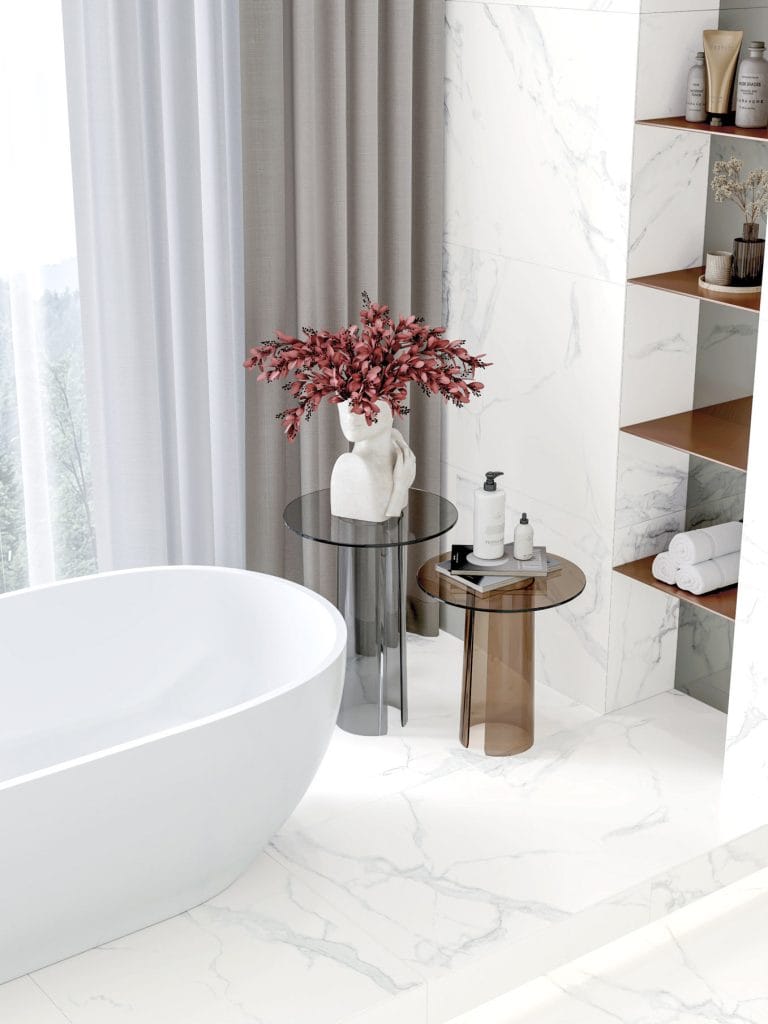
After browsing collections online, we often have several favourites that look equally appealing on screen. Differences become clearer when samples sit side by side. One may have a warmer base tone, another a more pronounced pattern, and a third a finish that responds differently to light.
Arriving with a few pieces of information turns a visit into a useful project step. You do not need a finished design, but it helps to know what you want to check.
Bring your space with you
Room photographs, approximate dimensions and a simple sketch are useful when discussing your choice. Note windows, doors and the main fixtures, especially in kitchens and bathrooms. If you have chosen furniture, bring a finish sample or a reliable photograph of its shade.
A short selection of favourite interiors is helpful too. Instead of ten unrelated images, choose two or three and explain what appeals to you: a quiet floor, warm wood, light walls or a pronounced texture. This gives the conversation a clear starting point.
Compare samples together
Two pale tiles can look noticeably different side by side. Consider the base tone, pattern contrast and relationship to white sanitaryware or chosen furniture. Do not view the tile in isolation: it will always have neighbouring materials in the finished room.
If you plan to combine materials, assess their overall effect. A marble pattern and a wood look can be harmonious when one leads and the other supports it. The interior featuring Cararra and Raggio illustrates one such direction.

Examine the surface from several angles
Look closely at the sample, step back and change your angle to the light. This helps reveal texture, reflections and pattern transitions. A surface that appears almost plain in a photograph may reveal greater complexity in person.
Think separately about wall and floor placement. The same material receives light differently when vertical or horizontal. If you can compare a sample in the intended room, examine it in daylight and under the lighting you plan to use.
Do not decide from a single face
One tile does not always represent the whole collection. Ask how the pattern varies between faces and look at additional images. This is especially useful for marble veins, wood grain and pronounced mineral markings.
Discuss grout as well. Its colour and arrangement affect the finished appearance, while the appropriate joint width depends on the product and installation conditions. Include grout in material selection rather than leaving it as a last-minute decision on site.
Check technical data and record your choice
Before finalising the specification, check the intended use, finish and properties relevant to your space. Wet floors require appropriate slip resistance; other applications may have different priorities. An attractive room image does not replace the specific product’s technical information.
Write down the full collection name, decor and format. Then review quantities, cuts and the laying plan with your designer or installer. This turns a choice you liked in the showroom into a clearly defined next step.
From inspiration to a more confident choice
You do not need all the answers in advance. Bring an idea, a few photographs and the questions that matter to you. Comparing materials in person can help narrow your options and explain why one combination suits your space better than another.
Would you like to compare materials in person? Visit Tilezza Concept Space in Belgrade Waterfront, Bulevar Vudroa Vilsona 8v, or in Novi Sad, Futoška 57. For contact details and current information, see Contact.


