

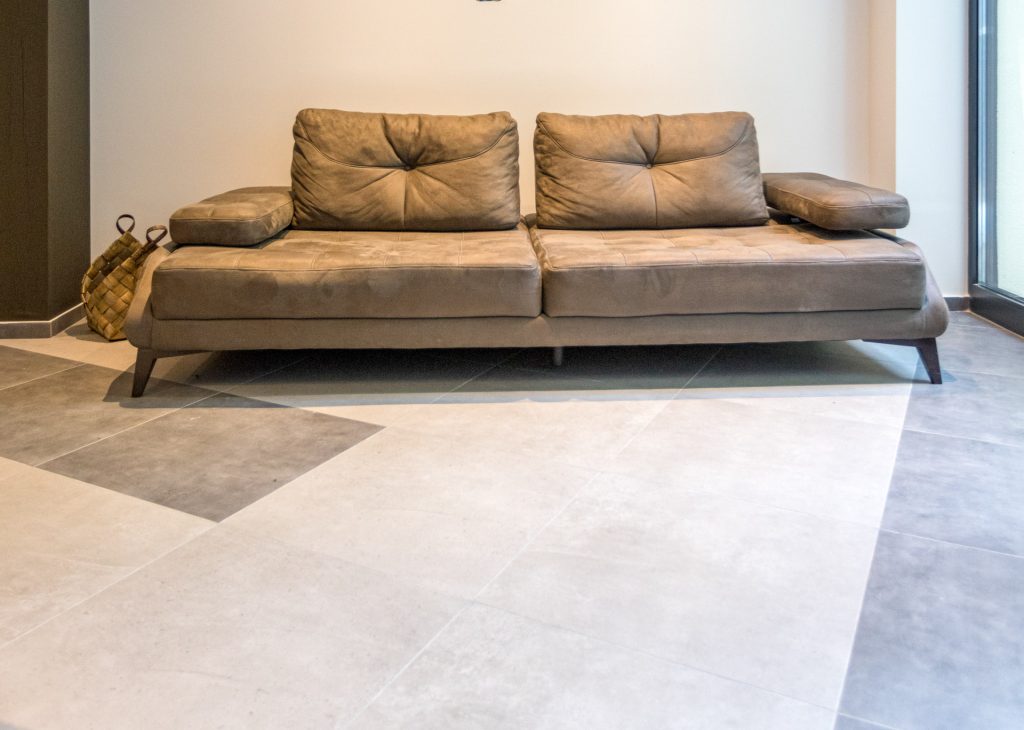
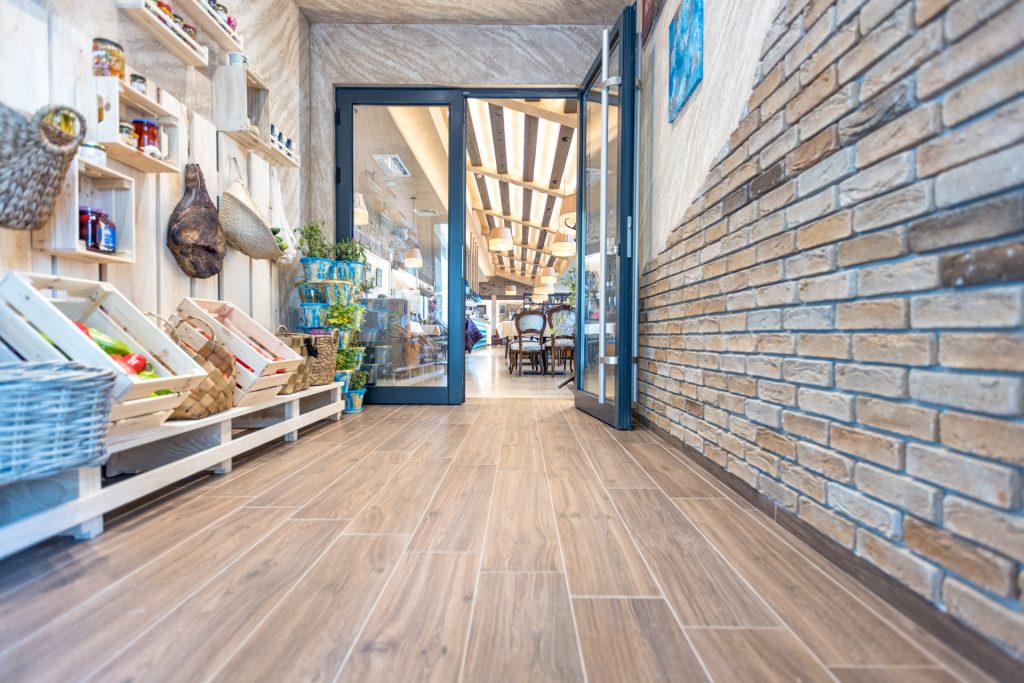
2. Where and How Are Ceramics Used? Spatial Expansion and Installation Techniques
Ceramics have transcended traditional spatial boundaries and, in 2026, are implemented through three key architectural applications.
1. Monolithic Kitchen and Bathroom Volumes
Instead of conventional modular cabinetry, large-format ceramic slabs are used to clad entire kitchen islands, integrated sinks, countertops, and bathroom surfaces. Minimal grout joints create seamless spaces that appear larger, cleaner, and more sophisticated.
2. Integrated Furniture and Architectural Details
Ceramics are increasingly used as finishing materials for cabinet fronts, sliding doors, dining tables, fireplace surrounds, and custom-designed furniture, enabling consistent material continuity throughout the interior.
3. Seamless Indoor–Outdoor Continuity
The same tile collection, manufactured with different slip-resistance ratings (for example, R9 indoors and R11 outdoors), extends continuously from interior living spaces onto terraces and patios, visually eliminating the boundary between indoor and outdoor environments.
Installation: Technical Requirements
The installation of contemporary ceramics—particularly large-format slabs—has evolved into a highly specialized engineering discipline.
Perfectly Level Substrate
Surface deviations must not exceed 2 mm over a span of 2 meters. High-performance self-leveling compounds are essential for creating a perfectly flat substrate.
Double Adhesive Application (Double-Coating)
Tile adhesive is applied with a notched trowel both to the substrate and to the back of the tile. This technique eliminates air pockets that could later lead to cracking under load.
Tile Leveling Systems and Minimal Grout Joints
Mechanical leveling systems consisting of clips and wedges are indispensable for preventing lippage between adjacent tiles. Rectified porcelain tiles are typically installed with minimal grout joints of only 1–2 mm, filled with epoxy grout to ensure maximum resistance to dirt, water, and chemicals.
3. Contemporary Textures and Color Trends in 2026
The aesthetic direction of 2026 marks a clear departure from cold, sterile minimalism. The focus has shifted toward warmth, tactile authenticity, and natural expression.
Trending Surface Textures
Digital Tactility (Haptic Surfaces)
Thanks to advanced synchronized 3D digital printing technologies (ink-sinking), the physical texture precisely matches the visual design. If a tile replicates natural stone with micropores or wood with visible grain, those details can actually be felt under the fingertips.
Fluted and Three-Dimensional Profiles
Three-dimensional ribbed and wave-patterned wall surfaces create dramatic feature walls that interact with ambient lighting, producing constantly changing plays of light and shadow.
Matte and Satin Finishes
High-gloss surfaces are gradually giving way to soft, velvety matte finishes that appear more natural, reduce unwanted reflections from artificial lighting, and are significantly easier to maintain.
Trending Color Palettes
Organic Neutral Tones
Following the principles of organic minimalism, warm, comforting colors dominate interior design—sand beige, greige (gray-beige), warm ivory, and coffee-inspired tones. These shades often resemble colors such as Cloud Dancer, a soft, warm white that brightens interiors without creating a sterile atmosphere.
Earthy Tones
Terracotta, baked clay, and warm earth-inspired colors introduce Mediterranean warmth and natural energy into kitchens, bathrooms, and living spaces.
Mineral and Dramatic Accents
Ceramic surfaces now replicate rare natural stones—including marble, onyx, and travertine—with remarkable realism, adding elegance, luxury, and visual depth to interior environments.
Antique Stone Tones
Limestone, travertine, terrazzo, and sandstone effects create a raw mineral aesthetic associated with spa environments, timeless architecture, and an authentic connection with nature, while simultaneously evoking a sense of history and understated sophistication.
Conclusion
The implementation of ceramics in contemporary architecture has evolved far beyond simply covering surfaces. Today, ceramics represent a strategic architectural tool capable of shaping both the visual identity and functional performance of a space.
By combining large-format slabs that create monolithic interiors, exceptional technical durability, and innovative tactile textures inspired by nature, ceramics have established themselves as one of the defining materials of contemporary architecture. They successfully meet the growing demand for luxurious aesthetics while simultaneously fulfilling the environmental and sustainability requirements expected of the buildings of tomorrow.
 Preporuka za Tilezza blog: između svakog glavnog poglavlja ubaci jednu veliku fotografiju (1600–2000 px širine) i po mogućstvu jednu fotografiju pune širine odmah ispod uvoda. To će članak učiniti mnogo preglednijim, povećati vreme zadržavanja posetilaca i dati mu izgled premium arhitektonskog magazina.